Oligo Pool Synthesis Guide - Design, Vendors & QC
Use this page when you need to plan an oligo pool synthesis order end to end. It helps you choose a method, screen sequences, compare vendor quotes, set QC thresholds, and decide what to do after delivery. Follow the pool path in order: define the application, screen sequences, compare vendors, then prepare the order file. For the complete planning path, start with the main Oligo Pool guide. If you need a faster answer on one step, open design rules, synthesis methods, vendor comparison, vendor specification review, cost planning, and troubleshooting.
Design checks, synthesis route, vendor confirmation, QC targets, and post-delivery decisions.
Pool orders where method choice, vendor fit, and QC expectations all affect the decision.
Method choice, vendor confirmation, QC thresholds, budget planning, and post-delivery decisions.
Open Research, References, and About for method notes and project boundaries.
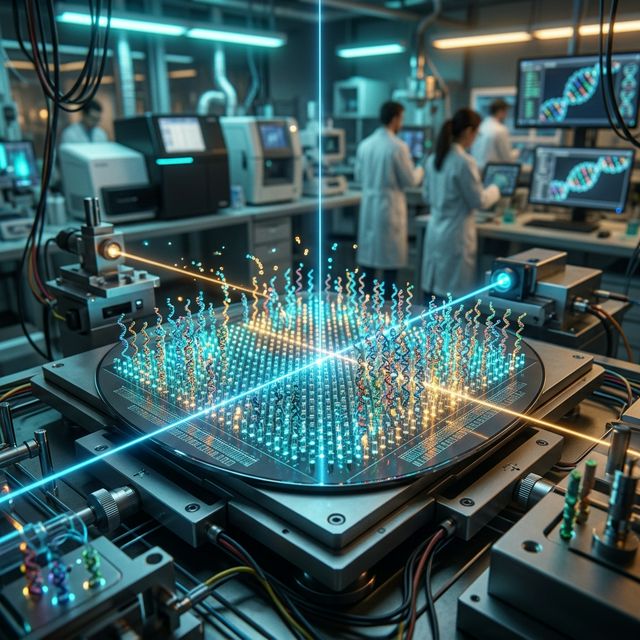
Plan method choice, vendor quotes, and QC checks before your pool order goes live.
Key Takeaways
- •Array-based synthesis (Twist, Agilent, IDT, GenScript) produces large pooled libraries at quote-based pricing, ideal for CRISPR libraries, MPRA, and gene assembly.
- •Column-based synthesis provides higher purity (>99%) but is limited to individual sequences — use for critical primers and probes, not pools.
- •Synthesis error rate increases with oligo length: ~1 error per 200 bases for array synthesis vs ~1 per 500 bases for column synthesis.
- •Key QC metrics for pools: representation uniformity (<3-fold CV), dropout rate (<10%), and Gini coefficient (<0.25). The n-1 deletion product is the most common impurity, detectable by mass spectrometry as a -289 to -329 Da shift.
- •Design optimization can reduce synthesis failures by 40-60%: avoid homopolymers (>5 nt), extreme GC (<25% or >75%), and strong secondary structures.
- •NGS verification at 500-1000x coverage per oligo is essential for confirming pool composition before downstream experiments.
Planning an oligo pool order?
Related planning checks
Ordering note
Use this guide to compare methods, QC expectations, and vendor tradeoffs before requesting quotes or submitting files. Confirm final protocol details against your lab process and vendor instructions.
Page contents
What Oligo Pool Synthesis Includes
Oligo pool synthesis is the large-scale production of many unique oligonucleotide sequences in a single manufacturing process. Unlike traditional column-based synthesis that produces one sequence at a time, array-based platforms synthesize thousands to millions of distinct oligos simultaneously, delivering them as a mixed pool.
This technology enables applications that would be prohibitively expensive with individual oligo synthesis:
CRISPR Libraries
Genome-wide knockout, CRISPRa/i, and tiling libraries with 10K-200K sgRNA oligos per pool.
Gene Assembly
Overlapping oligos for Gibson assembly or Golden Gate cloning of synthetic genes (1-10 kb).
MPRA / Reporter Assays
Massively parallel reporter assays testing thousands of regulatory element variants simultaneously.
Targeted Sequencing
Hybridization capture panels and amplicon sequencing panels for NGS target enrichment.
Mutagenesis Libraries
Saturation mutagenesis, deep mutational scanning (DMS), and variant libraries for protein engineering.
DNA Data Storage
Encoding digital information in synthetic DNA sequences using large oligo pools as the storage medium.
Which Synthesis Method Fits Your Pool?
Use this comparison when you need to decide whether array-based or column-based synthesis fits your pool size, oligo length, acceptable error rate, purification needs, and downstream process.
| Feature | Array-Based Synthesis | Column-Based Synthesis |
|---|---|---|
| Scale | Large pooled libraries | Individual or smaller precision sets |
| Length Fit | Quote-dependent; confirm full submitted length | Often selected for difficult or critical individual sequences |
| Error Rate | ~1 per 200 bases | ~1 per 500 bases |
| Coupling Efficiency | 98.5-99.5% per step | 99.0-99.8% per step |
| Full-Length % | 30-70% (length-dependent) | 70-95% |
| Quote Basis | Pool size, length tier, QC scope, delivery amount | Sequence count, length, purification, scale |
| Turnaround | Confirm quote definition and cutoff timing | Confirm quote definition and purification timing |
| Purification | Pool-level only | Individual (PAGE, HPLC) |
| Best For | Libraries, pools, high-throughput | Primers, probes, critical sequences |
Coupling Efficiency and Full-Length Yield
Where N = oligo length in nucleotides. For a 100-mer at 99% coupling efficiency:
Full-length % = 0.99^99 x 100 = 37%. At 99.5% efficiency: 0.995^99 x 100 = 61%. This is why coupling efficiency is the single most important synthesis quality parameter.
Use our Error Rate Calculator to compute full-length percentage for your specific oligo length and coupling efficiency.
Which Design Checks Should You Run Before Ordering?
Sequence composition directly affects synthesis quality. Problematic sequences cause higher error rates, reduced representation, and complete dropouts from the pool. Pre-synthesis screening can eliminate 90% of quality issues.
| Sequence Feature | Acceptable | Problematic | Consequence | Tool to Check |
|---|---|---|---|---|
| GC Content | 30-70% | <25% or >75% | Synthesis failure, low yield | GC Analyzer |
| Homopolymer | ≤4 bases | ≥5 bases (esp. poly-G) | Deletion errors, dropouts | Batch QC |
| Secondary Structure | ΔG > -3 kcal/mol | ΔG < -5 kcal/mol | Incomplete synthesis | Structure Predictor |
| Tandem Repeats | ≤4 bp repeat unit | >6 bp repeat unit | Slippage errors | Batch QC |
| Palindromes | ≤6 bp | >8 bp | Hairpin during synthesis | Structure Predictor |
| Length Uniformity | ±5 bp within pool | >20 bp range | Amplification bias | Batch QC |
We recommend running all pool sequences through our Batch Sequence QC tool before placing a synthesis order. The tool screens for all the above issues simultaneously and flags sequences that need redesign, saving costly re-synthesis.
Which QC Metrics Matter After Synthesis?
After synthesis, use these metrics to decide whether the delivered pool is ready for cloning, capture, screening, or another downstream process.
| Metric | Definition | Target | Action if Failed |
|---|---|---|---|
| Representation | % of designed oligos detected (≥50 reads) | ≥90% | Redesign missing sequences |
| Dropout Rate | % of oligos with <10 reads | <10% | Increase sequencing depth |
| Uniformity (CV) | Coefficient of variation of read counts | <3-fold (10th-90th %ile) | Sub-pool problematic oligos |
| Gini Coefficient | Inequality measure (0 = perfect, 1 = one oligo only) | <0.25 (ideal <0.15) | Check synthesis platform |
| Sequence Accuracy | % of reads matching designed sequence | >85% perfect match | Adjust error-rate expectations |
| NGS Depth | Average reads per designed oligo | 500-1000x | Sequence more deeply |
Use our Uniformity Estimator to predict expected representation based on your pool size and sequencing depth, and our Error Rate Calculator to interpret synthesis fidelity results.
How Should You Compare Vendors and Quotes?
Compare vendors using the same pool size, oligo length, QC scope, lead time, delivery amount, and data-return expectations, not just the headline price per oligo. Use this section to normalize quote requests, then open the current vendor comparison page for provider details.
| Quote Field | Ask Every Vendor | Why It Matters |
|---|---|---|
| Pool-size tier | Is the quoted tier based on total sequences, sub-pools, or delivered library format? | A quote for the wrong tier can make two vendors look comparable when they are not. |
| Length tier | Which full insert length, including adapters or flanks, is covered by the quote? | CRISPR guides, MPRA constructs, and assembly oligos can land in different length bands. |
| QC scope | Is representation QC bundled, optional, or excluded, and do you receive per-sequence read-count data? | Aggregate QC is not the same as representation data you can use for go/no-go decisions. |
| Delivery amount | What material amount is guaranteed per pool or per oligo, and in what format? | Downstream cloning, amplification, and backup aliquots depend on received material. |
| Turnaround definition | Does the quoted lead time mean production start, shipment, delivery, or data/report availability? | Operational timelines slip when vendors define the same phrase differently. |
Vendor pricing varies by pool size, oligo length, QC scope, and account terms. Contact vendors for current quotes. Use the oligo pool vendor comparison for the current decision page and the vendor specification review for product-page details.
Pilot check: When budget and timeline allow, request a pilot pool from shortlisted vendors before committing to a large order. Compare the same QC outputs side by side, especially per-sequence representation and dropout patterns.
Quote check: Don't assume "included QC" means the same thing across vendors. Ask whether QC is included, optional, or excluded, and whether the deliverable includes per-sequence read-count data.
How Much Should You Budget Beyond Synthesis Price?
Budget for the full project, not the list price alone. Use this table to estimate the combined cost of synthesis, QC, and downstream handling for common pool sizes:
| Pool Size | Synthesis Cost | NGS QC (500x) | Amplification / Cloning | Total Estimate |
|---|---|---|---|---|
| Pilot pool | Request current tier quote | Ask whether QC is included, optional, or excluded | Budget PCR, cleanup, cloning, and validation | Compare complete project cost |
| Focused screen | Request current tier quote | Ask for per-sequence representation data | Budget amplification and cloning replicates | Compare by usable library output |
| Genome-wide pool | Request sub-pool and delivery assumptions | Confirm raw read-count access and depth | Budget multiple validation steps | Compare by screen-readiness, not list price |
| Deep tiling pool | Request splitting strategy and feasibility review | Confirm dropout and representation reporting | Budget redesign and backup sub-pools | Compare by operational risk |
Budget note: For pools >50K oligos, negotiate volume discounts directly with the vendor's sales team — published list prices can often be reduced 20-40% for academic accounts or multi-pool orders. Ask about "failed oligo credit" policies — Twist offers re-synthesis credit for oligos with <50 reads.
Sequencing-depth cost check: Budget for 2-3x the sequencing depth you think you need. The first NGS run often reveals 5-15% of oligos are underrepresented, requiring a second round of deeper sequencing before you can confidently proceed to downstream experiments.
Planning a 10K CRISPR Library Order
Let's walk through the complete process of ordering a focused CRISPR knockout library targeting all human kinases (~500 genes × 20 sgRNAs = 10,000 oligos).
Design sgRNA Sequences
Use CRISPick (Broad Institute) to design 20 sgRNAs per gene. Export as FASTA. Each oligo = 5' adapter (24 nt) + sgRNA spacer (20 nt) + scaffold overlap (20 nt) + 3' adapter (24 nt) = 88 nt total.
Pre-Synthesis QC Screen
Upload a 1K pilot free, or all 10K sequences with Tool Membership, to our Batch QC Tool. Typical results for a kinase library:
Redesign the 70 failing oligos using alternative sgRNA candidates from CRISPick.
Place the Order
For a 10K pool, normalize quotes by full submitted length, QC scope, raw representation data, delivery amount, and turnaround definition before choosing a vendor. Submit using the vendor template after confirming the current product tier and file rules.
Receive and Validate
Pool arrives lyophilized. Resuspend in TE buffer to 10 nM. Amplify with 8 PCR cycles (Q5 polymerase). The vendor's NGS report should show: ≥95% representation, Gini <0.2, <5% dropout. If dropout exceeds 10%, jump to our dropout recovery steps.
Control design note: Always include 50-100 non-targeting control sgRNAs in your library design. These serve as negative controls for hit calling and also help assess representation uniformity across the pool — controls should have roughly average representation if synthesis was uniform.
What to Do After Your Pool Arrives
Resuspension
Resuspend lyophilized pool in TE buffer (10 mM Tris-HCl, 0.1 mM EDTA, pH 8.0). Mix gently, avoid vortexing. Use our Dilution Calculator for concentration calculations.
Open Dilution CalculatorPCR Amplification
Amplify with minimal cycles (6-10) using high-fidelity polymerase (Q5, KAPA HiFi). Monitor by qPCR to avoid over-amplification, which causes representation bias.
Open Tm CalculatorSize Selection & Cleanup
Gel-extract or bead-purify (AMPure XP) to remove primer dimers and truncation products. Verify on Bioanalyzer or TapeStation.
NGS Verification
Sequence at 500-1000x depth per oligo. Analyze representation, dropout, and uniformity metrics. Resynthesize failed sequences if needed.
Open Uniformity EstimatorDownstream Application
Proceed to cloning (CRISPR libraries), assembly (gene synthesis), or direct use (capture probes) based on your application.
Amplification check: Over-amplification is the #1 cause of representation skew in oligo pools. Never exceed 10 PCR cycles. Monitor amplification in real-time by running a parallel qPCR with 1 µL of pool — stop when the curve begins to plateau (typically cycles 6-8). If you see a plateau before cycle 6, your input is too low.
How to Recover from Dropout and Skew
Pool dropout rates above 10-15% can compromise downstream experiments. Before re-ordering, try these recovery strategies:
Dropout Triage Protocol▾
Characterize the dropouts
Export the list of missing/underrepresented oligos. Check for common patterns: high GC (>70%), homopolymers (poly-G ≥4), strong secondary structures (ΔG < -5 kcal/mol). If >80% of dropouts share a sequence feature, the issue is design — not synthesis.
Increase sequencing depth
Some "dropouts" are actually present but at very low abundance. Re-sequence at 2-5x your original depth. If oligos appear at 5-50 reads (vs 0), they're "underrepresented" not "dropped out."
Adjust amplification
If uniformity (Gini >0.3) is poor despite adequate depth, the issue may be amplification bias. Try: (a) reduce cycles from 10 to 6-8, (b) use emulsion PCR to suppress bias, (c) add 5% DMSO if GC-rich oligos are disproportionately underrepresented.
Spike-in rescue
For <500 true dropouts: order them individually as column-synthesized oligos ($5-10 each) and spike into the pool at equimolar ratio. This is cheaper than re-synthesis of the entire pool.
Decision: Proceed or re-order?
Proceed if: ≥85% representation and dropouts are randomly distributed (no pathway bias).
Re-order if: <85% representation OR dropouts cluster in critical gene sets. Redesign flagged sequences before re-synthesis.
Dropout tracking note: Keep a "dropout watchlist" across synthesis batches. If the same oligos consistently drop out from different vendors, the sequences themselves are problematic — no vendor can synthesize them reliably. Consider codon-optimizing or shifting the target region.
Which File Format Should You Send Each Vendor?
Each vendor has slightly different requirements for order submission. Match the vendor's expected file format before you upload so your order does not get delayed in review.
| Submission Field | What to Confirm | Why It Matters |
|---|---|---|
| Upload format | Current CSV, FASTA, XLSX, or portal template | Wrong columns or headers can delay feasibility review. |
| Sequence direction | Required 5′ to 3′ orientation and whether adapters are included | A reversed or partial insert changes the actual product. |
| File-size and pool-size limits | Maximum rows per file, sub-pool naming, and split strategy | Large pools may need multiple files or sub-pools. |
| Name requirements | Allowed characters, length limits, duplicate handling | Invalid IDs can break QC reports and downstream mapping. |
| Delivery format | Tube, plate, dry, dissolved, normalized, or amplified | Downstream cloning and resuspension depend on delivered format. |
| Resuspension details | Buffer, volume, concentration basis, and storage conditions | Representation can be affected by handling and dilution choices. |
| QC data | Whether you receive raw reads, per-sequence counts, or aggregate QC only | Aggregate QC cannot replace library-level representation analysis. |
| Reorder terms | Repeat-order policy, sequence changes, and updated feasibility review | Reorders may not preserve the same assumptions as the first quote. |
Use the Vendor Format Adapter to prepare a vendor-style order file after you confirm the current portal template.
Delivery verification note: Always include 3-5 "sentinel sequences" — unique barcodes not in your experimental set — to independently verify pool identity upon delivery. If your sentinel reads are absent or at wrong ratios, you may have received the wrong pool.
Frequently Asked Questions
What is the difference between array-based and column-based oligo synthesis?▾
How many oligos can be in a single pool?▾
What is the maximum oligo length for pool synthesis?▾
How do I assess oligo pool quality after synthesis?▾
What sequences should I avoid in pool synthesis?▾
How much does oligo pool synthesis cost?▾
Planning Context
Where this page fits
Use this page for synthesis planning. For the broader concept, start with /oligo-pools. When vendor shortlisting is the next decision, open /oligo-pools/vendor-comparison.
Vendor-sensitive details
Check current public materials before acting on price, length, or turnaround details. Start from the vendor specification review for product-page details, then move into the Research reports.
Related Tools
Batch Sequence QC
Screen pool sequences for GC extremes, homopolymers, repeats, and quality issues.
Error Rate Calculator
Calculate full-length percentage and coupling efficiency for oligo synthesis.
Uniformity Estimator
Predict pool representation uniformity based on size and sequencing depth.
Coverage Calculator
Determine required library size for statistical coverage of your target space.
Format Converter
Convert between FASTA, CSV, TSV, and plain sequence formats before final order formatting.
Vendor Format Adapter
Format oligo pool orders for specific vendor submission requirements.
Related Oligo Pool Synthesis Pages
Continue with the upstream design, vendor, cost, or troubleshooting page that matches the next stage of the pool order.
Design an Oligo Pool Before Ordering
Start upstream sequence planning before vendor selection or pricing becomes the main task.
Check Oligo Pool Design Rules
Review sequence rules that reduce dropout, synthesis failure, and cloning friction before quote requests.
Choose Between Array and Column Synthesis
Open this when the main question is platform fit rather than the ordering process itself.
Compare Oligo Pool Vendors
Use the comparison page when turnaround, scale, and included QC packages are the key tradeoffs.
Estimate Oligo Pool Cost
Check budget and scenario planning before you start a quote round with vendors.
Troubleshoot Pool Dropout and Uniformity Problems
Move here when a delivered pool underperforms and the next job is diagnosis or recovery.